Every material has two lives. There is the life it shows in the brochure — clean, uniform, photographed on the day it was installed — and there is the life it will actually live, decades long, in weather. Most disappointment in buildings comes from choosing materials for the first life and then having to inhabit the second.
Patina and deterioration are different things
The useful distinction is between materials that weather and materials that fail. Weathering is change that adds character: the softening of brick, the silvering of untreated oak, the deepening tone of stone as it takes on its surroundings. Failure is change that reads as neglect: coatings that peel, renders that streak and crack, plastics that chalk and fade unevenly.
The difference is usually honesty. Materials that are what they appear to be — brick that is brick, timber that is timber, metal that is metal — tend to change gracefully, because their surface and their substance are the same thing. Materials that imitate other materials carry their disguise on a thin outer layer, and time is unkind to thin outer layers.
Choose materials whose twentieth year you would be happy to photograph. The first year takes care of itself.
The British weather is a design tool
Rain is not incidental to a building in this country; it is a permanent collaborator. Where water runs, materials darken; where it is thrown clear, they stay pale. A facade streaks or mellows according to details that cost nothing at the drawing stage — the projection of a sill, the depth of a coping, the shadow line under a parapet. We design the water's route deliberately, because the water will find a route either way.
Orientation matters in the same quiet way. A south face and a north face of the same material will be different colours within a few years. None of this is a problem. It is only a problem if nobody thought about it.
A short tour of old friends
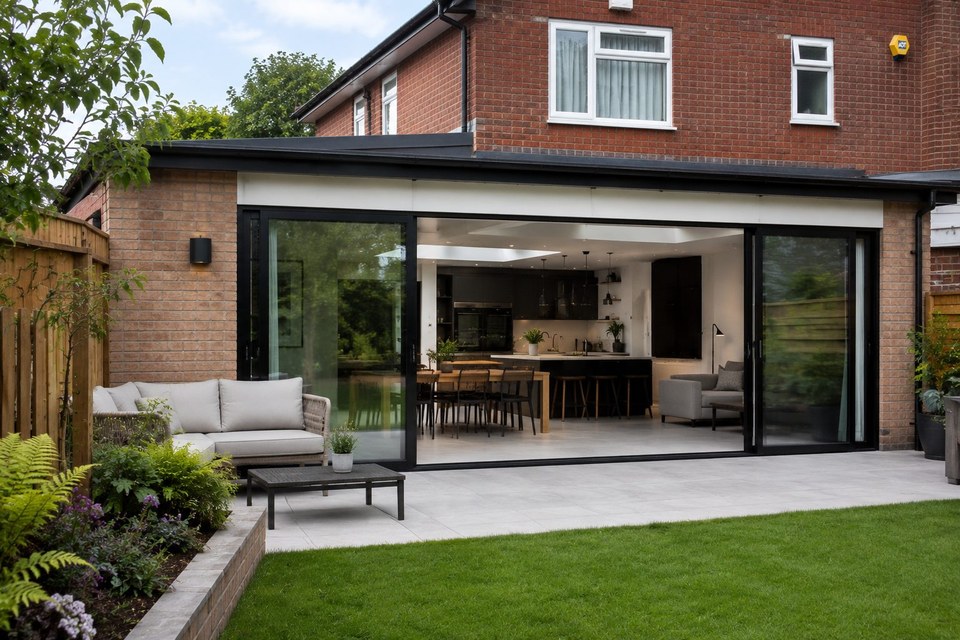
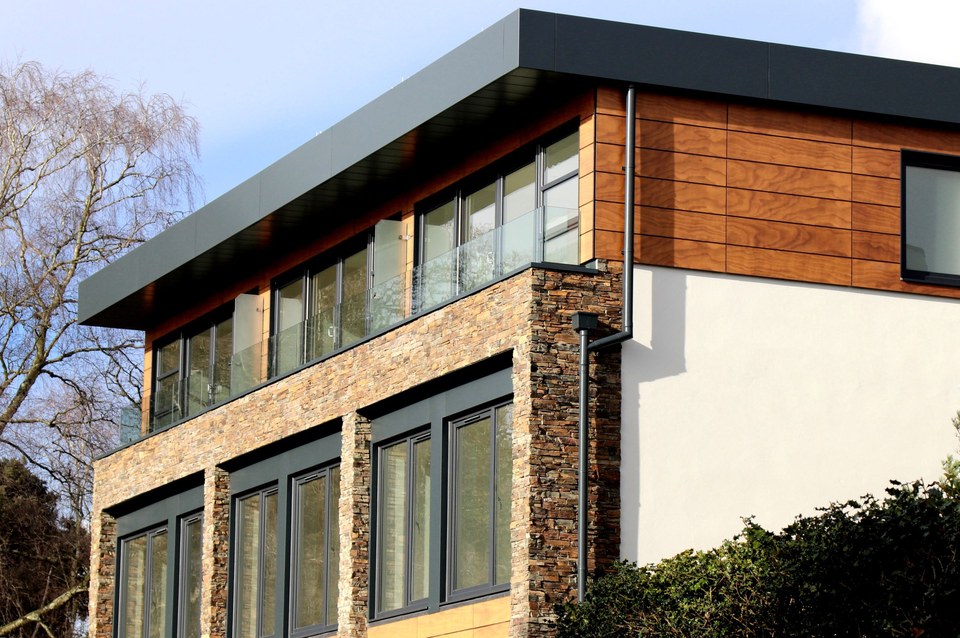
Brick has survived every fashion for a reason: it weathers by softening, its repairs are honest, and a wall of good brick in a lime-rich mortar seems to belong to its street within a decade. Stone behaves similarly, provided it is chosen for the job — a stone that suits a sheltered wall may sulk on an exposed parapet, which is why provenance and bedding matter more than brochure photographs.
Timber divides into two lives of its own. Painted softwood is a commitment to a maintenance cycle, honourable if entered into knowingly. Untreated durable species — oak among them — take the opposite bargain: no upkeep, in exchange for accepting that the material will choose its own colour, arriving at silver-grey by a route that is uneven and, for a year or two, tests the owner's nerve. Metals are the long game: properly detailed zinc, lead and copper roofs are measured in generations, and their gradual dulling is precisely the point.
Texture is how materials meet our light
British light is low, grey and sideways for much of the year, and it is unkind to shiny things. High-gloss surfaces need sunshine to perform; under an overcast sky they read as flat and slightly tired. Textured, matte, honest surfaces do the opposite — riven stone, brushed timber, handmade brick — because texture gives weak light something to do. This is one reason traditional local materials so often look right here: they were chosen, over centuries, by exactly this sky.
Sample in weather, not in showrooms
A material chosen under gallery lighting is a stranger to the building it will live on. We stand samples outside — against the site's own brick, in the site's own light — and leave them there through rain. A sample panel built early and left to weather during the planning period is the cheapest insurance a facade can have: by the time the scaffolding goes up, nobody is guessing.
Restraint is a maintenance strategy
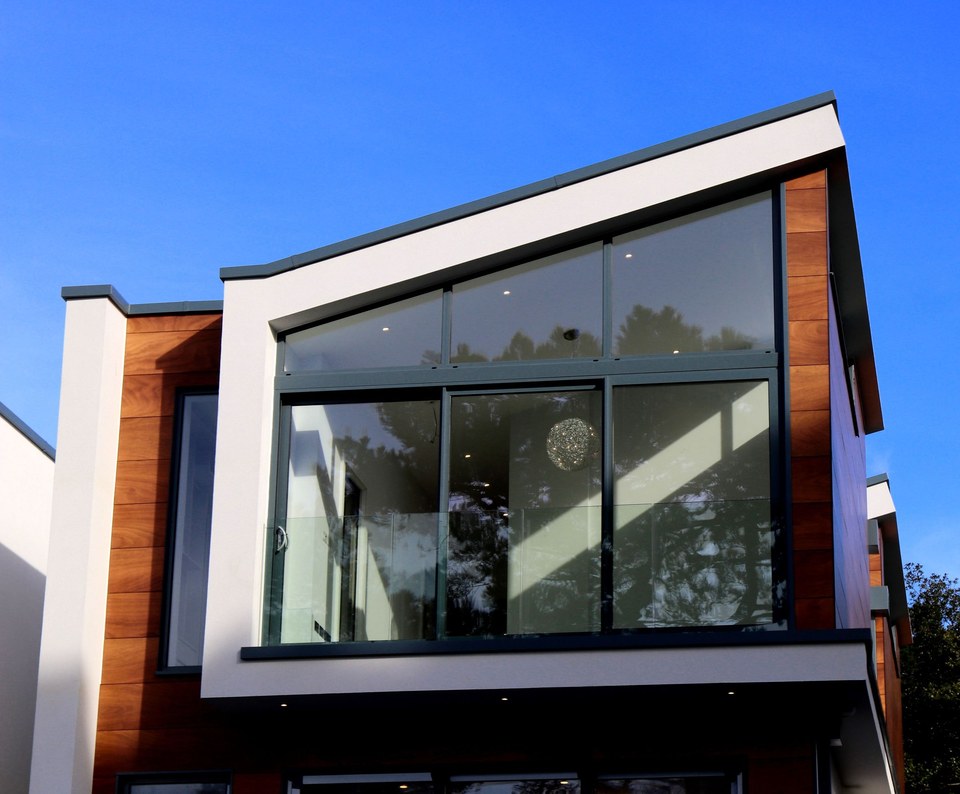
The most reliable palettes we build are short. A house of two or three materials, used honestly and detailed with care, ages as one thing; a house of eight materials ages as eight separate experiments, each on its own schedule. Restraint is often discussed as an aesthetic preference. It is equally a practical one: fewer materials means fewer junctions between unlike things, and junctions between unlike things are where buildings work hardest.
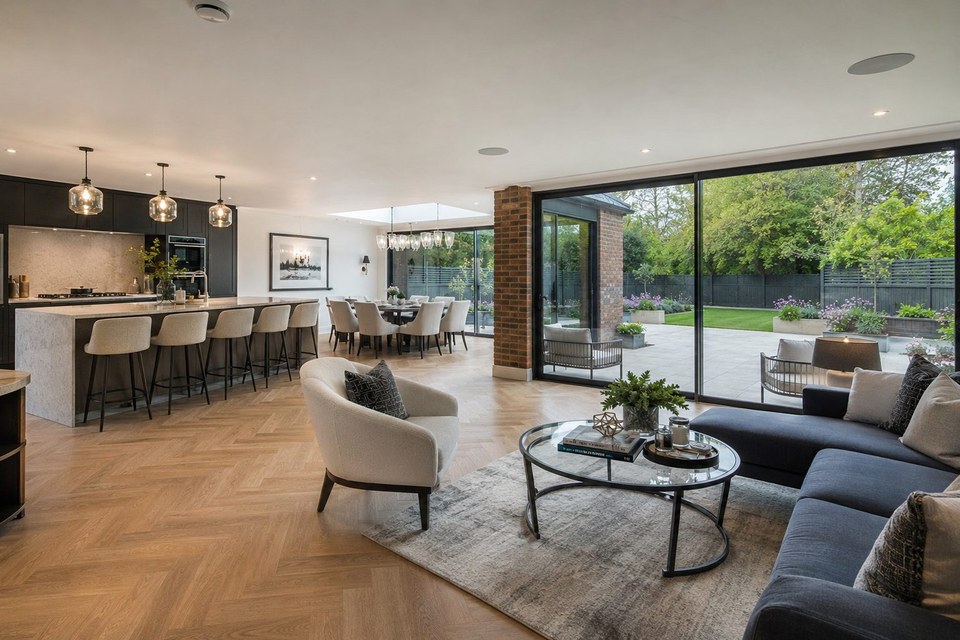
Inside the house the same rule holds. Floors, worktops and joinery that wear in — oak, stone, properly made hardwood — accumulate use as texture. Surfaces that wear out accumulate use as damage. The difference between the two is most of what people mean when they say a house feels loved.
There is also a budgetary honesty in thinking this way. Materials should be priced across decades, not at the checkout: the cheaper cladding that needs recoating every few years, or replacing in fifteen, is rarely the cheaper cladding. When a client asks where money is best spent, our answer is usually the same — spend it on the surfaces you touch and the envelope that faces the weather, and economise where neither hand nor rain will ever reach.
So when we present a palette to a client, the question we ask is never only how it looks today. It is: what does this street corner look like after twenty winters — and will you still be glad you chose it? The materials that answer that question well are, reliably, the simple ones.